
headluma
News and notesHow-to guide

Setting Up a Studio Interview: A Practical Guide From Sound Check to Recording

Megan Thomas

6 minutes to read

A step-by-step guide to preparing for a recorded interview in our studio or at your premises: room, lighting, sound, guest briefing and the first minutes of the session.
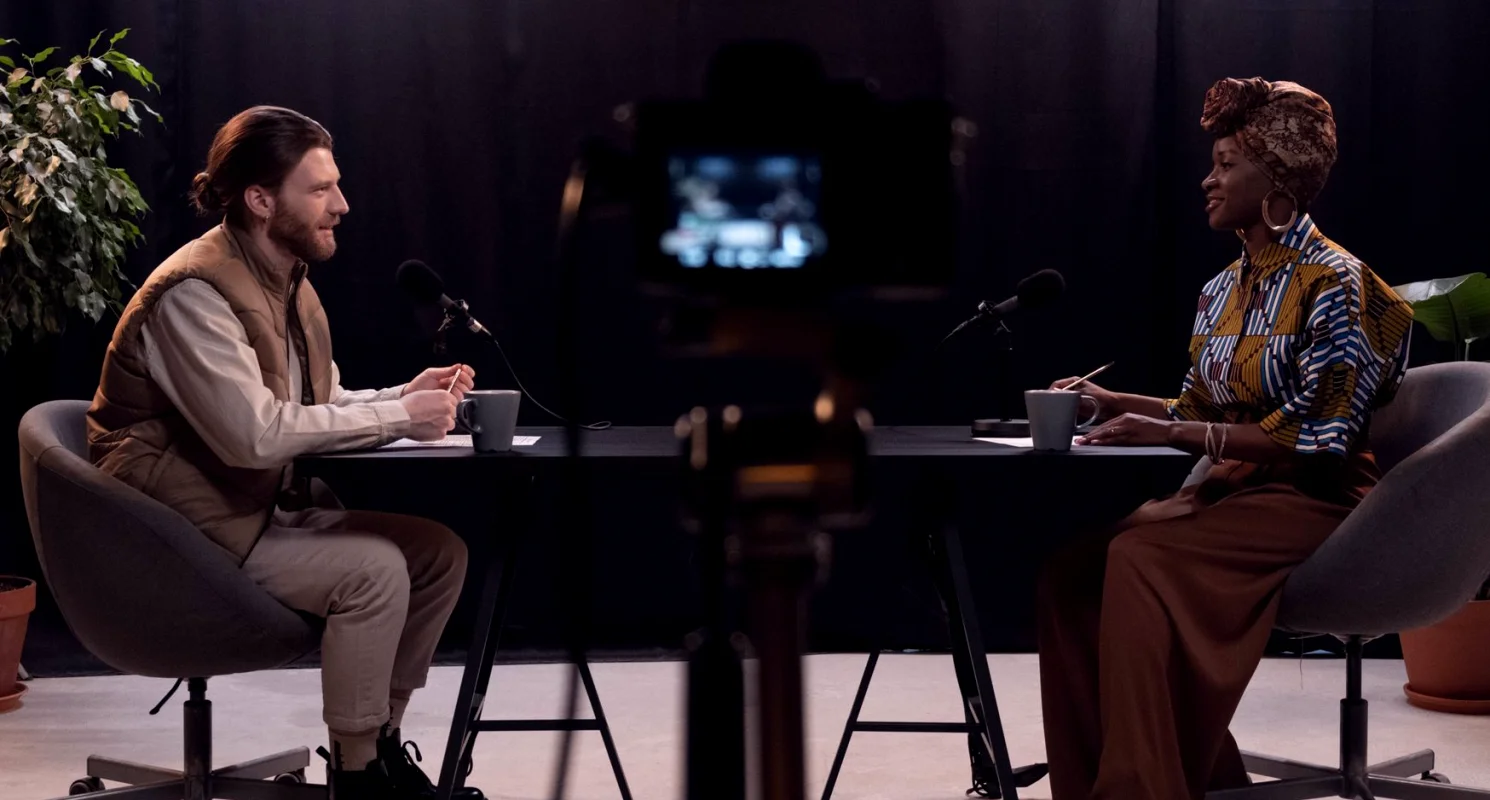
Setting Up a Studio Interview: A Practical Guide From Sound Check to Recording

Choose the room before you choose the kit

Most problems with an interview are decided before anyone switches a camera on. Whether we record in our Swansea studio or at your premises, the room matters more than the equipment we bring into it. A quiet space with soft surfaces will give you cleaner sound than an expensive microphone in a hard, echoing room.

If you are hosting us, walk the space with a simple question: what can I hear when everyone stops talking? Listen for air handling, fridges, lifts, traffic and corridor chatter. Carpet, curtains and bookshelves help, while glass walls and bare floors work against you. Send us a few phone photographs of the room and we can tell you where the guest should sit and what to move before we arrive.

Mid autumn adds its own small risks. Rain on a skylight, early dark and heating coming on at a set time all show up on a recording, so check the building's timetable as well as its look.

  • Pick the quietest room, not the most impressive one
  • Switch off fridges, fans and notification sounds
  • Avoid rooms with large bare windows or hard floors

Lighting a face so it reads on screen

Good interview lighting is mostly about direction and consistency. We place a soft key light slightly to one side of the camera, add a gentler fill on the opposite side, and use a small light from behind to separate the guest from the background. That gives shape to the face without harsh shadows under the eyes.

Daylight is the usual complication on location. A window beside the guest looks fine at the start and then changes as clouds move, leaving the first answers brighter than the last. We either block the window and light the scene ourselves, or position the guest so the window works as a steady side light. Either way, the choice is made before recording starts, not halfway through.

Ask your guest to avoid very fine stripes, tight checks and bright white shirts. Mid-tone, plain clothing sits best against most backgrounds and keeps the picture calm for the viewer.

  • Block or control window light rather than mixing it with ours
  • Plain mid-tone clothing works best on camera

Sound: what I check before the first question

I look after audio on these shoots, and my first job is a short test with the guest in their real seat. I ask for their name and what they had for breakfast, because relaxed, ordinary speech shows me true levels better than a count to ten. Then I listen on headphones for hum, buzz, clothing rustle and reflections from nearby walls.

A small clip microphone on the chest gives a steady, close sound and stays put if the guest moves. We often add a second microphone on a boom just out of frame as a backup. If the lapel microphone is brushed by a jacket or necklace, the second source can save an otherwise good answer.

Please do not be alarmed when I ask a guest to remove a bracelet or silence a watch. Small noises are very hard to remove later, and a thirty-second adjustment at the start saves a retake at the end.

  • Test levels with natural speech, not counting
  • Keep a backup microphone running throughout

Briefing the guest and setting the interviewer's questions

A nervous guest gives short, stiff answers. The director and I spend a few minutes before recording explaining what will happen: where to look, that they can restart an answer, and that we are not hurrying them. Most people relax once they understand there is no live clock running over them.

Share the broad topics with the guest in advance, but not a script. Rehearsed wording sounds flat, while a guest who knows the subject and has a few points in mind speaks clearly and naturally. Ask the interviewer to keep questions short and open, and to wait a beat after each answer, since that pause gives the editor a clean edit point.

Tell the guest to answer in full sentences that restate the question, for example, the council meeting was moved because. Those complete statements are far easier to use in a bulletin without the question attached.

  • Give topics in advance, never a script
  • Ask the interviewer to pause after each answer

Running the session and what we do between takes

Once recording begins, the director watches the picture and performance while I monitor sound. If a lorry passes or a phone rings, we stop and tell the guest plainly, and the answer starts again. A clean second take is quicker than trying to rescue a spoiled first one in the edit.

We keep a written log of timings and notable answers as we go, so the editor does not have to search for the quote you remember. We also record a short period of room tone, the quiet sound of the space with nobody speaking. Editors use it to smooth joins between clips so cuts do not jump.

Cutaways, such as the guest's hands or a wide of the room, are shot after the interview. They give your team something to cover edits with, and they take only a few minutes if the lights are still in place.

  • Stop and retake rather than fix noise later
  • Record room tone and cutaways before packing away

After the shoot: files, naming and hand-over

When the session ends, we back up the footage on site before anything leaves the room. Files are named by date, subject and take, in a pattern we agree with your newsroom beforehand, so ingest does not become a guessing game on deadline.

If you need the interview quickly, tell us at the start which format and frame rate your gallery expects. We would rather confirm that in a short call than convert files later. For longer interviews, we can mark the best answers in the log so your producer can find them in minutes.

Finally, check that the right person on your side knows the delivery method and time. Most late hand-overs come from a missing contact, not from anything technical.

A good studio interview is mostly preparation: a quiet room, steady light, clean sound and a guest who knows what to expect. None of it is complicated, but each piece needs attention before recording begins. If you are planning a session for the coming weeks, send us the location, the likely length and your delivery format, and we will talk through the setup with you.

More from the newsroom

  1. Studio or Your Premises: Choosing Where to Record an Interview

    Two ways to run a lit television interview, in our Swansea studio or at your own premises. We compare what each gives you and say which we recommend for most newsroom requests.

  2. Newsroom workflow checklist: what to settle before you decide

    A practical list of questions to work through before you change how footage reaches your desks: ingest, file naming, hand-over and who owns each step when a story breaks.

  3. What News Edit and Packaging Costs, and What Moves the Price

    A plain account of how editing time, turnaround, finishing and delivery formats shape the cost of a news package, written by a camera operator who sits beside the edit suite.

Find us

Visit us
14 Wind Street Yard, Swansea SA1 1DP
By phone
01792 410286
headluma

News video production from Swansea: crews, live links, fast editing and studio interviews for television newsrooms and broadcasters across the UK.

© 2026 headluma. All rights reserved.